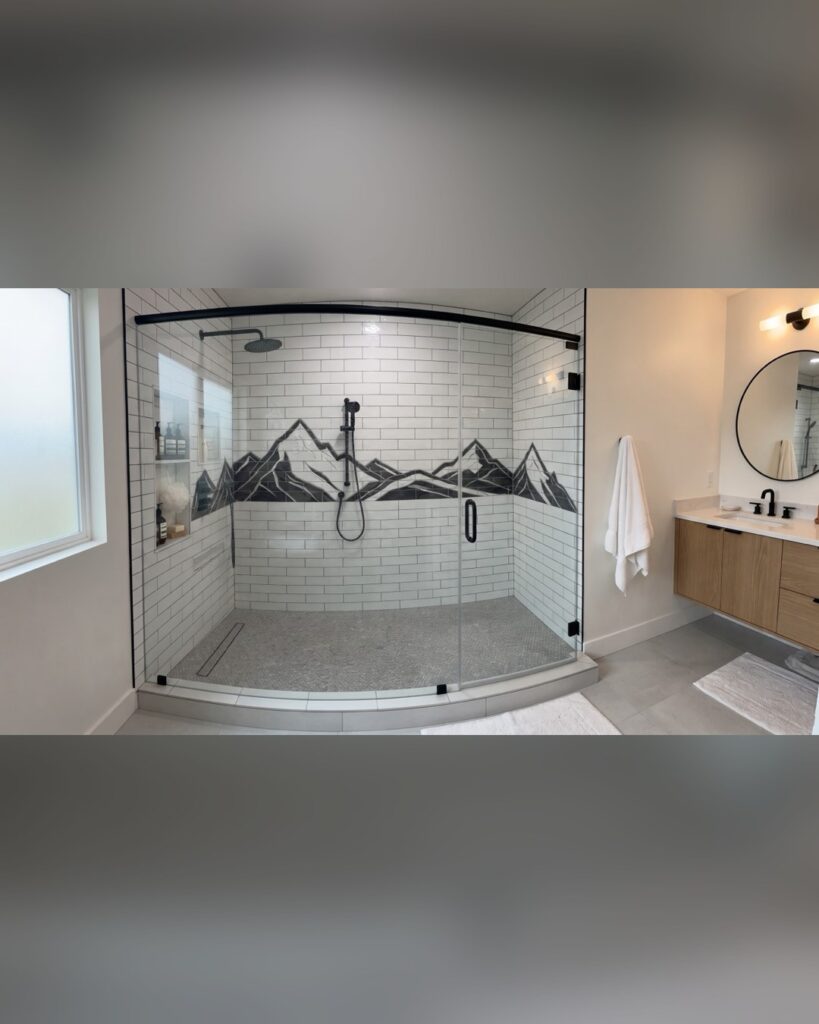
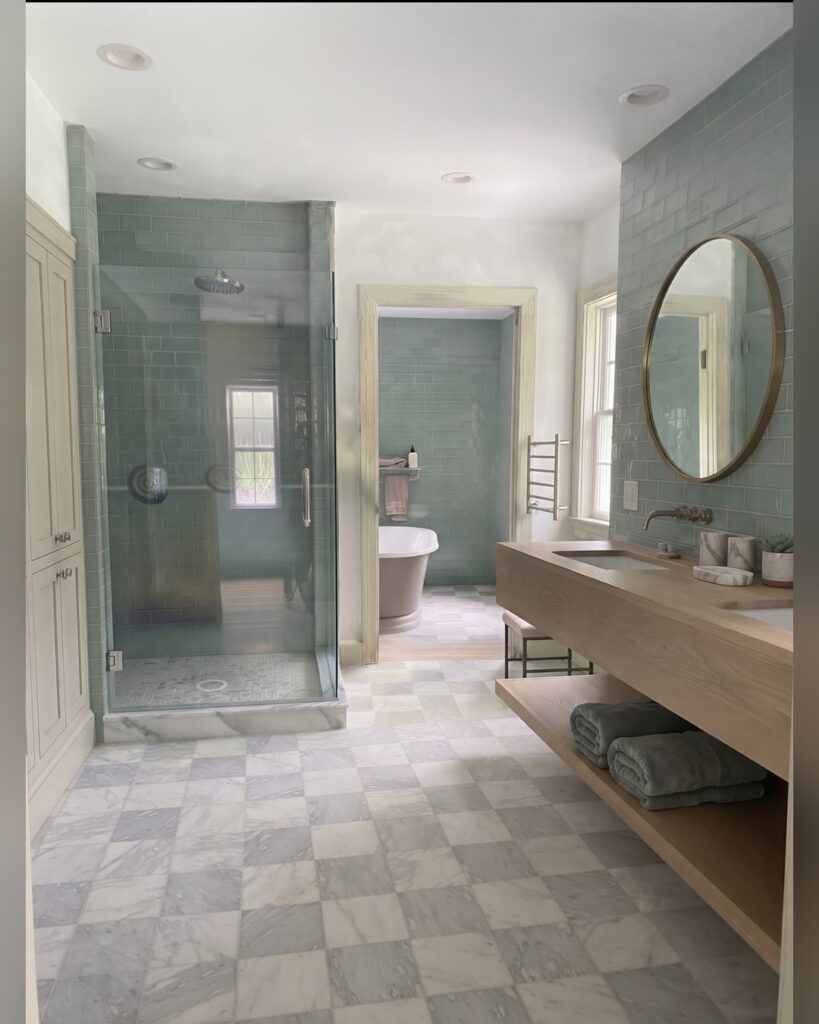
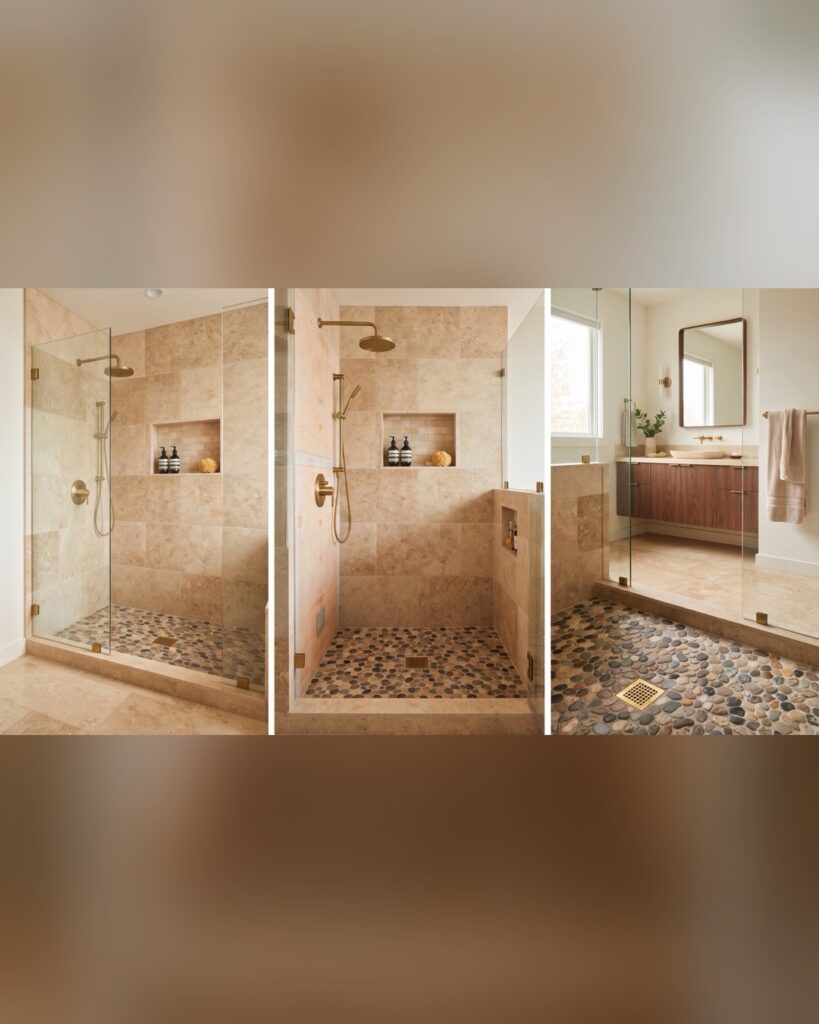
How to Start a Custom Mosaic Commission—Even Without a Finished Idea
“I want something different, but I don’t know exactly what.”
That’s enough to begin a conversation.
A custom mosaic commission doesn’t have to start with a complete drawing. It can start with a place, a color, a subject, or an idea you keep coming back to.
Lion & Crown Mosaics is the artwork side of The British Remodeler. It’s where we explore pieces that are made for a particular space, rather than selected from a catalog.
Here are a few ways to find your starting point.
Start with where the piece will go
You may not know what the artwork should look like yet, but you probably have a setting in mind.
Perhaps it’s an empty wall, a feature within a bathroom, a decorative backsplash, or a standalone piece for a particular room.
Photographs and approximate dimensions help us understand the space. Tell us whether the artwork should draw attention from across the room or reward a closer look.
The setting is part of the brief—not an afterthought.
Start with something personal
Your idea might come from a landscape, an animal, a memory, or a shape you’ve always liked.
It doesn’t need an elaborate story. “I love these colors” is useful information too.
Explain what matters about the reference. Is it the subject itself, the movement, the mood, or the combination of textures?
That helps separate the core idea from details you’re happy to explore.
Start with the material
Sometimes the attraction is the material rather than an image.
You may like the character of broken pieces, the contrast between surfaces, or the look of glass within a composition.
Tell us what draws you in. We can discuss material choices in relation to the intended piece and its setting rather than assume every idea calls for the same approach.
You don’t have to want something loud
Custom artwork doesn’t have to fill a wall with color.
Your preference may be for a restrained palette, a small accent, or a composition that reveals its details gradually.
Equally, you may want the piece to be the first thing anyone notices.
Neither direction is more deserving of a commission. The point is to make the work feel connected to you and the space it will live in.
Talk about the practical side too
Alongside the design, we need to discuss the physical project.
Useful starting details include:
Approximate dimensions.
The intended location.
Whether the piece is standalone or part of an installation.
Your preferred timeframe.
Your budget.
Any mounting, delivery, or installation requirements.
Those arrangements should be addressed in the proposal. Don’t assume that design, fabrication, delivery, and installation are all part of one price.
What if you only have a rough idea?
Send it.
A photograph with a few sentences can be more useful than trying to write the perfect brief.
Tell us what you like, what you don’t, and what you’re unsure about. The first discussion is there to shape the brief—not to judge your idea.
Make it part of a bigger project—or let it stand alone
You can inquire about a mosaic as part of tile or bathroom work through The British Remodeler.
You can also discuss an individual artwork commission without planning a renovation.
Either way, the starting question is the same: what would you like this piece to bring to the space?
You don’t have to want a completely different kitchen to want something different from the one you have.
Perhaps you like the cabinets and countertops, but the space between them feels unfinished. Perhaps you want color, texture, or something with a little more character.
A backsplash can be its own project. The question is what you want it to contribute.
At The British Remodeler, we like to begin with the room around it.
Decide whether it should blend in or stand out
There isn’t one right answer.
You might want a quiet background that lets the cabinets, countertops, or lighting take the attention. You might want the backsplash to be the feature that gives the kitchen its identity.
Think about which direction appeals to you:
Simple and understated.
Textured but restrained.
Geometric and structured.
Colorful and expressive.
A custom artistic feature.
These are starting points, not categories you have to stay inside.
Look at the kitchen as it is
It’s easy to fall for a tile in isolation. Before committing, consider it alongside the parts of the room you intend to keep.
Bring photographs of the cabinets, countertop, flooring, and surrounding space. If you already have a tile in mind, share the product details so we can discuss it in context.
The aim isn’t to make everything match. It’s to decide which combinations you actually like together.
Give the layout some attention
Choosing a tile is only one part of the design.
Where should the backsplash begin and end? What happens at an exposed edge? Do you want the same treatment around a window or behind the range?
We want those questions in the planning conversation—not left until the installation reaches the edge. Tell us about any particular lines or details that matter to you, including how you want the backsplash to meet adjoining surfaces.
You can keep it simple
A custom project doesn’t have to mean a complicated pattern.
If your taste leans toward clean lines and a restrained finish, say so. There’s no requirement to add decorative elements just because they are available. Sometimes the brief is simply: “I want it to look like it belongs here.” That is a perfectly good place to start.
Or make room for something individual
If ordinary tile selections aren’t giving you what you want, a custom mosaic is another direction to consider.
Through Lion & Crown Mosaics, we welcome ideas for decorative panels, original compositions, and features that bring something personal into a kitchen. You might arrive with a clear concept. You might only know the colors or feeling you’re after. Either way, we can discuss the setting, scale, and scope.
Custom artwork has its own design and fabrication scope, so those details need to be discussed as part of the project.
What to send when you inquire
To start a backsplash conversation, send:
Your project location.
Photographs of the full kitchen and backsplash area.
Approximate dimensions.
A note about what is currently on the wall.
Any tile selections or inspiration images.
Your preferred timeframe and approximate budget, if known.
If you’ve already bought materials, include the product information and quantity.
Planning a Bathroom Remodel in Colorado Springs? Start Here.
You know the bathroom needs changing. Figuring out exactly what to change is the harder part.
Do you replace the shower and leave everything else alone? Keep the layout but update the finishes? Before choosing tile, take a step back. At The British Remodeler, we want the first conversation to focus on your space, your priorities, and what the work should include.
Here’s how to get that conversation started.
Start with what bothers you
Walk into the bathroom and make a short list.
Perhaps the shower feels cramped. There’s nowhere useful to put your shampoo. You dislike the floor, the lighting is wrong, or the room doesn’t feel comfortable. The list doesn’t have to be elegant. It just has to be honest.
Separate your list into three groups:
Things that need to change.
Things you would like to change.
Things you’re happy to keep.
That gives us a better starting point than “we want a new bathroom.” It also helps keep the discussion specific.
Decide how far you want to go
A focused tile update and a broader bathroom renovation are different projects.
You might want a new shower while keeping the floor and vanity. You might want matching finishes throughout the room. You don’t have to settle every detail before getting in touch. But it helps to say which direction you’re leaning in.
The proposed work should identify who is responsible for each part. Don’t assume something is included just because it was mentioned.
Collect ideas, then explain what you like about them
Send a few reference images, but tell us what catches your eye.
Is it the tile color? The simple layout? The recessed storage? The contrast between the floor and wall? You may like one detail without wanting the entire room. That distinction helps us understand your taste.
Talk about the budget early
If you have a spending limit, say so.
We would rather discuss your priorities within an honest budget than develop a scope that was never realistic. Tell us where you want to put the emphasis. Perhaps the shower is the main event, while the rest of the room stays simple. The budget conversation isn’t about persuading you to spend more. It’s about understanding the boundaries of the project.
Ask what the proposal includes
Before agreeing to the work, look beyond the total price.
Ask about removal, preparation, materials, finishing details, and any work being arranged separately. If you’re unsure whether something is included, ask. A clear question now is better than an assumption later.
Bring us the starting point—not a perfect plan
You don’t need a finished design to make an inquiry.
Send your Colorado Springs project location, photographs of the existing room, approximate measurements, and a description of what you want changed. We can start there.